

A personal journey
Alcohol harm causes detrimental impacts on society, individuals and so many families – I should know, I’ve suffered for the last two years grieving the loss of my father to this ugly, preventable harm.
At the age of 26 I lost my dad.
Two years before, I distantly watched him go from a social drinker to somebody who couldn’t put a drink down.
I watched him go in and out of hospital because the NHS believed he was ‘mentally capable’ to be discharged, all because he knew what the date was and who his children were.
They ignored the fact that it was his tenth visit to the A&E that week alone, and although he couldn’t admit he had a problem with alcohol misuse, maybe deep-down he was seeking for their urgent assistance, but he was denied that, and I must learn to move on from that anger.
I watched my dad go from looking like a handsome and young 53-year-old man, to someone who looked so fragile, as if he was approaching his 80’s.
I’ll live more years without my dad then I ever spent with him – and that’s something that doesn’t sit very well with me, almost makes me sick.
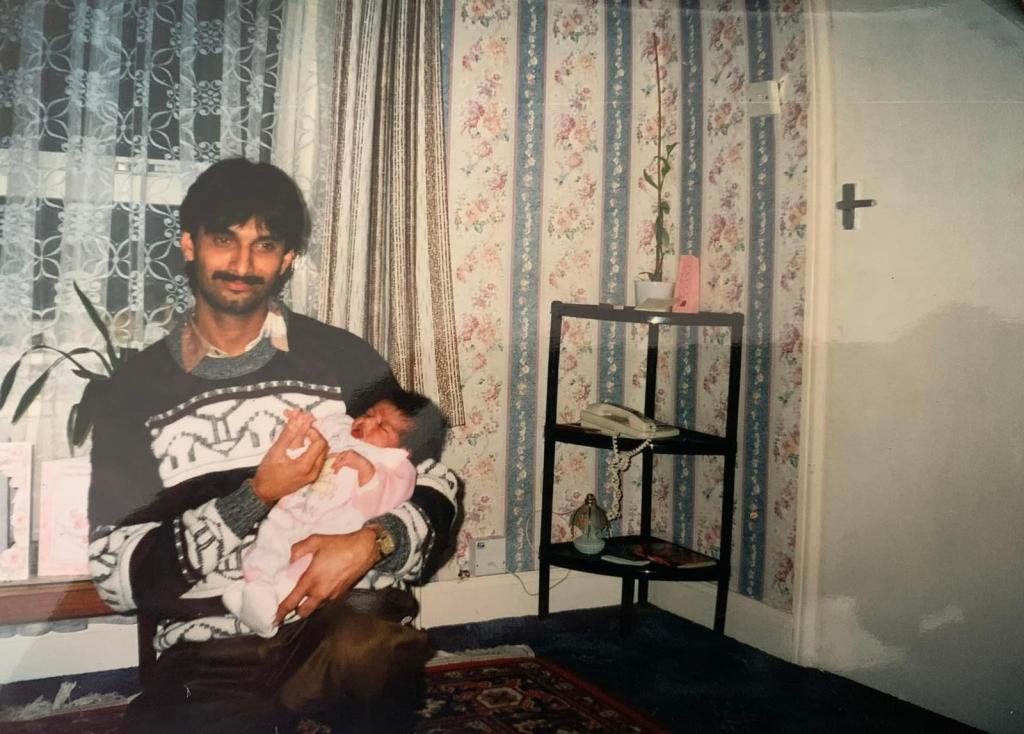
It wasn’t until I fearlessly spoke out to try and remove the stigma from alcohol harm stories, when I started to realise alcohol harm affects so many more people, but they don’t have the courage to speak about it.
Most of the time, it’s because of the stigma attached to alcohol harm and choosing silence means the probability is less of somebody judging your experience and capabilities.
Isn’t it sad knowing people choose silence over speaking out – that’s the environment we live in, even in today’s age. It’s no wonder more people don’t seek the necessary help.
How long will we choose to ignore this increasing number? How long will we brush it off and laugh about being a ‘binge drinker’? Is the culture where we shape everything around alcohol really that normal? Is that why there is so much stigma surrounding alcohol dependents because ‘binge drinking’ is seen as normal?
There are so many questions, and some really do have answers whereas the others may be more complicated.
Learning more about alcohol harm provided me with so much empathy towards what I can only imagine was my dad’s journey with alcohol misuse.
My brothers and I begged him to stop, and we’d be angry when he didn’t. I genuinely believed it was a ‘choice’ he was making, I blamed him for it.
What if he genuinely couldn’t stop even if he wanted to? What if all the hospital visits weren’t a cry for attention, but they were a cry for help?
Sadly, there was no sufficient support in place to help him to stop, and that’s not his fault, and I wish I could say that to him one last time.
In the meantime, I’ll continue to campaign to ensure other children and families don’t have to face the same pain as me and my family. Alcohol harm can be reduced, and it can be done in Parliament.
Crafting a comprehensive approach
To tackle alcohol harm effectively, we need a multi-faceted approach:
- Normalise conversations around alcohol harm, so the stigma is removed. The Government need to stop being so worried about looking like they’re ‘nanny-stating’ when discussing the topic and encourage free and open conversations about pragmatically tackling alcohol harm.
It’s a conservative value to do so because the spill over effects of the harm are costing taxpayers, individuals and society.
- Update the cross-departmental, stand-alone Alcohol Strategy. With Cameron back in the heart of the government, there is an opportunity to leverage his previous contacts who helped create the original strategy. It needs to address various factors contributing to alcohol harm in the UK, with key measures including: the way supermarkets advertising their heavily discounted booze at the front of the stores. Increasing alcohol duty to ensure the industry bears the social and economic costs of their products, just like other industries do. Contrary to libertarian concerns, higher alcohol duty does not negatively impact pubs. Freezing alcohol duty harms pubs by making supermarket alcohol cheaper, so people will opt for this option instead of visiting their local pubs. Even the hospitality industry doesn’t want alcohol duty frozen, they want help with small business tax reliefs etc.
- Introduce various public health campaigns to raise awareness about impacts of excessive alcohol consumption. Excessive alcohol consumption is linked to 7 different types of cancers, including breast cancer. (I was shocked when I found out too!).
- Invest and re-open the alcohol treatment services that have closed during the past 20 years. Local areas urgently need increased funding specifically for alcohol treatment services, separate from drug treatment services. By establishing more facilities where individuals suffering from alcohol misuse can receive specialised help, the more people will adapt a healthier lifestyle.
- Invest in training alcohol treatment specialists to effectively support ethnic minority groups, such as South Asian communities, by incorporating cultural resonance and involving religious leaders.
Unveiling the silent crisis
It’s no secret that I’m a big advocate for tackling alcohol harm, but why is it a topic that nobody really talks about? I believe there is a lack of education on the detrimental impacts caused by alcohol harm. Not many people realise that alcohol harm is a widespread issue, but it’s also a preventable harm. The right policies can be used to tackle alcohol harm.
This is a subjective topic, and it entirely depends on how you perceive the question. To me, alcohol harm represents adverse effects of consuming an excessive amount of alcohol regularly, meaning an individual is:
- Drinking over the Chief Medical Officer’s drinking guidelines of 14 units a week, regularly.
- Turning to a drink to help calm down or take worries away, regularly.
- Using alcohol to help you sleep, regularly.
- Causing yourself severe and damaging injuries because of your drinking, regularly.
See the pattern? There’s a clear difference between social drinking and enjoying your time with friends and family, in comparison to drinking because it’s an answer to a problem.
Once you start relying on alcohol to help you in any aspect of life, or when it’s affecting different aspects of your life e.g. causing family breakdowns, not being able to perform at work because you’re always too hungover or tired because you didn’t get a good night sleep etc., you fall into the ‘alcohol harm’ category.
In April, the Office for National Statistics (ONS) released their alcohol-specific death statistics, and it painted a grim and heartbreaking picture.
Over 10,000 alcohol-specific deaths were reported for the first time across the country. This is 4.2% higher than 2021, and a shocking 32.8% higher than 2019, which is the last pre-pandemic year.
These deaths cannot be blamed on ‘pandemic drinking’ anymore. In fact, they show a continuation of people’s drinking habits following the pandemic, a period that clearly altered people’s drinking habits for good.
Libertarians often accuse us alcohol harm reduction campaigners of bowing to the nanny state, don’t get me wrong, I understand there are moderate drinkers – I am one of them. As much as I’m a believer of freedom of choice, I’m also a realist. The ONS statistics highlights there’s a real public health crisis at hand here – 10,048 deaths in 1 year. That is thousands of families who have lost a loved one, thousands of children who have lost a parent, and a massive loss on economic productivity.
Currently, many people take time off work due to a hangover, or because of alcohol dependency.
The NHS and GPs need to update their training and strategies to deal more effectively with alcohol dependents. Instead of merely issuing sick notes, medical practitioners should focus on helping patients lead healthier lives. The current approach of referring individuals to Alcoholics Anonymous (AA) is not suitable for everyone, particularly within South Asian communities. Tailored support is necessary.
Westminster’s silence
The ONS alcohol-specific deaths statistics barely got any coverage in Westminster. Christian Wakeford MP and Maggie Throup MP, who are vocal advocates for tackling alcohol harm in the UK, were amongst the only politicians who were courageous enough to speak up in the Commons.
Dan Carden MP wrote an interesting article for Politics Home about the statistics. While I may not always align with the Labour Party’s views, Carden’s point about the pervasive neglect of this issue is undeniably valid. Alcohol harm affects real people every day, yet it remains a low priority for many in Parliament.
The Conservatives, in particular Health Minister Andrea Leadsom were compelled to address the questions directed at them regarding alcohol specific deaths at the recent Health and Social Care oral questions. Whereas the Shadow Health Secretary, Wes Streeting hasn’t plucked up the courage to comment on the statistics, let alone acknowledge that alcohol harm is a serious issue.
In Streeting’s June 2023 interview with The Guardian he proudly called himself a ‘binge drinker’. This saddens me as an incoming Labour Health Secretary would clearly have no plan to solve the issue of alcohol harm – despite creating a ‘pledge’ on tackling health inequalities through a ‘prevention-led’ approach. How can such a strategy be effective if it ignores alcohol harm, a significant contributor to health disparities?
How many more lives must be lost to a preventable harm before Wes Streeting decides it’s an important issue for him? Surely as Shadow Health Secretary, the ONS statistics on alcohol-specific deaths would be a top priority, especially when you’re creating a prevention strategy!
Unfortunately, the current Conservatives’ policy on tackling alcohol harm isn’t any stronger – the party must address ‘drugs’ and ‘alcohol’ separately. The longer we combine the two, the more we’ll see funding for this strategy focus on drugs rehabilitation rather than alcohol. Meaning more lives will be lost to alcohol harm, and those who desperately need alcohol treatment will have to wait far longer, eventually falling through the crack, which can be avoided if right policies are implemented.
While I do not believe the Conservatives have a perfect strategy for tackling alcohol harm, they do acknowledge its existence unlike the Shadow Health Secretary.
Former Public Health Minister, Neil O’Brien MP launched a public consultation on changing the labelling of low and no alcohol drinks because he saw they were getting popular, and he understood the necessity to tackle alcohol harm.
Maggie Throup MP another former Public Health Minister advocated to tackle alcohol harm and still does as a backbencher MP.
It was David Cameron’s Conservative-led government that introduced the Alcohol Strategy in 2012, focusing solely on tackling all harms caused by alcohol. Admittedly, since his departure the strategy has been abandoned.
From naivety to advocacy
I recognise how my initial naivety led me to expect everybody to understand the harms of alcohol despite only learning more about it since losing my dad. Yet, I’ve come to understand that while I may have been naïve, the responsibility for change lies with politicians, particularly those in the health department, to grasp the widespread issue of alcohol harm.
Recent statistics from the ONS paints a sombre picture of alcohol-specific deaths, underscoring the urgent need for action. I am not an advocate to ban alcohol, I just want politicians to help tackle alcohol harm. After all, isn’t it said that everything should be done in moderation?
It’s all too easy to forget that the numbers included in the alcohol-specific deaths are real people who have lost their lives – real children who have lost their parent, real partners who have lost their other half, and real family members and friends who will now grieve for the rest of their life for an individual who could have been saved. I am one of these people. I am a child who lost her father to his battle with alcohol.
As I continue this journey, I am compelled to advocate for change, not only for my sake but for the countless others affected by this silent epidemic. It’s time to turn our collective grief into action, ensuring that no more lives are needlessly lost to alcohol harm, a preventable harm.



 Vrushika Valand
Leave a comment